
Back to: Male vs Female Rider: In the Saddle – Consequences
Due to the muscular and skeletal differences between males and females, it is no surprise that they require two completely different saddle builds to be able to perform at the best of their ability, while preventing saddle related discomfort and injury.
Seat Width
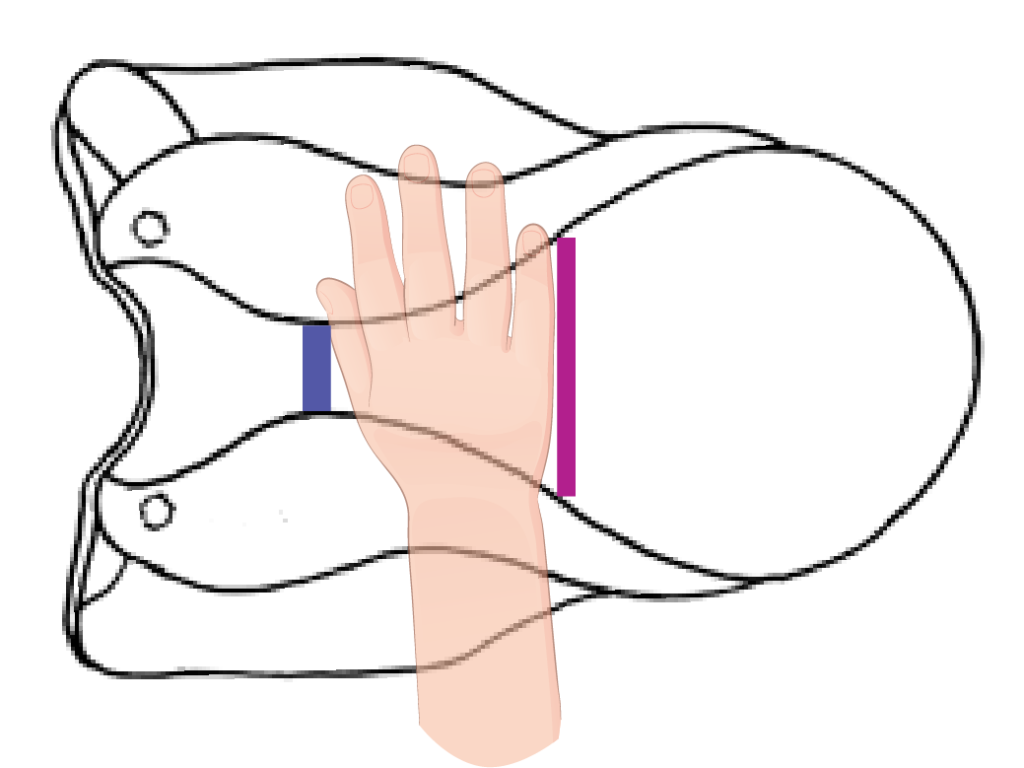
The width of the seat can be measured by looking at the saddle from the side at eye-level to find the lowest point. Prior to starting, ensure the stirrup bar is parallel to the ground. Place your hand on the saddle in that point with your fingers open but not spread (the average hand is 4″ wide) with your thumb towards the pommel and your pinkie towards the cantle. The area just in front of the thumb is where the waist of the seat is measured. The area behind the pinkie is where the seat width is measured.
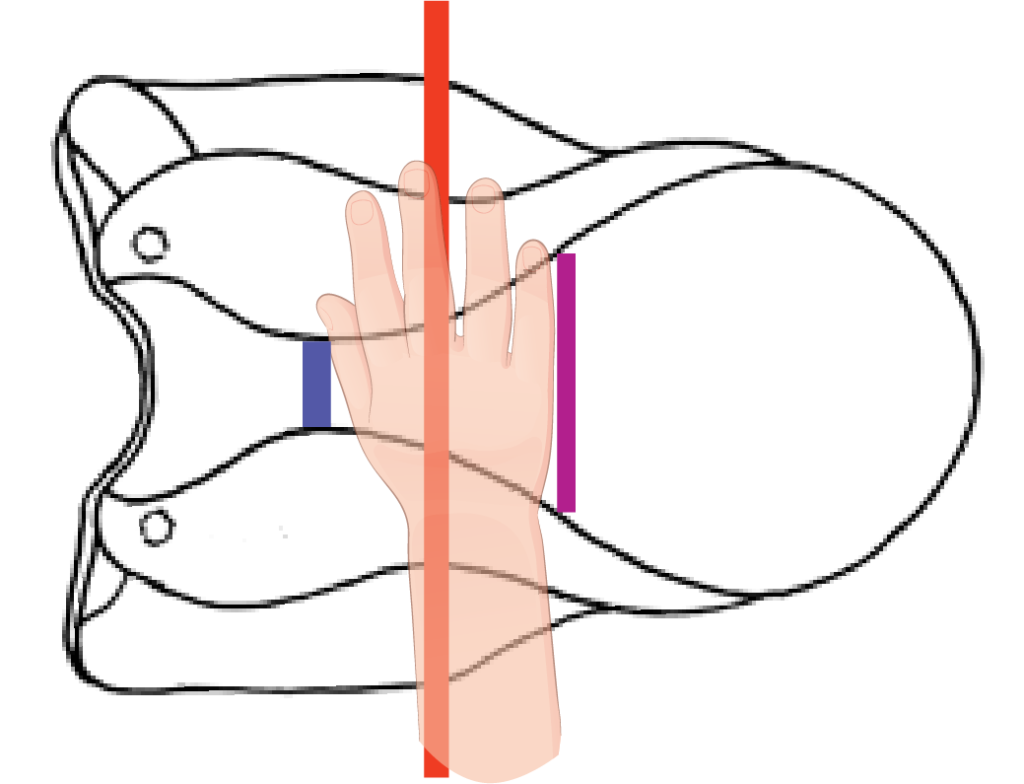
This diagram shows the lowest point of the saddle. This is where your hand should be placed to measure the waist and the seat width.
The diagram shows the blue bar in front of the thumb as the waist measurement, while the purple bar behind the pinkie shows the seat width measurement.
The red bar indicates the lowest point of the saddle with the hand centered over it.
The seat width on a male saddle is narrower than the seat width on a female saddle due to the width of the seat bones. If a female rides in a male saddle, she will lack proper support beneath her seat bones and either dislocate or strain her hips, or end up scooting backwards to find a wider part of the seat. The issue with this is now she is no longer seated in the correct spot, no longer aligned with the balance point of the saddle and balance point of the horse, and is places excess pressure in the back of the saddle. Additionally, sitting further back in the saddle causes the stirrup bar to constantly pull the leg forward into a chair seat and prevent the shoulder-hip-heel alignment. When a male rides in a female saddle with a wider seat, he will find himself feeling pulled-apart at the hips.
Seat Support (Cantle Support)
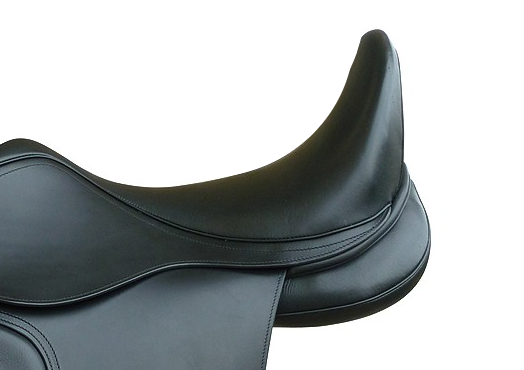
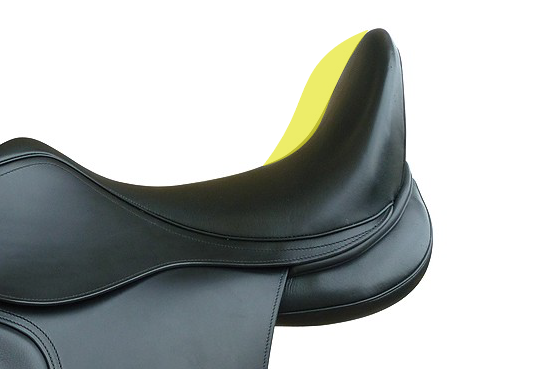
Due to the shorter tailbone and greater lordosis of the female physique, the gluteus maximus is positioned higher than that of the male physique. As such, when a female sits in the saddle, she requires additional support behind the buttocks to prevent the pelvis from falling backwards. With the support, the female must use the erector spinae to hold the position and maintain a neutral pelvis which loses the elasticity and fluidity in the seat aids. Without using the back muscles, the rider will feel the pelvis fall backwards and create tension and pressure on the spinal discs and place them at risk for pinched, slipped and herniated discs as well as the loss of the pliable seat. If a male were to ride in a saddle with additional seat support, he would find himself constantly pushed forward.
Twist
The twist is situated between the upper inner thighs of the rider. With a higher Q angle on the female and the narrower space between the upper inner thighs, the female rider requires a narrower twist. Due to the wider space in males, they require a wider twist. A narrower waist would leave a male rider feeling no contact with the horse whereas a wider twist would cause the female rider to feel as though they’re being pulled apart at the hips and cause severe hip, knee and back pain.
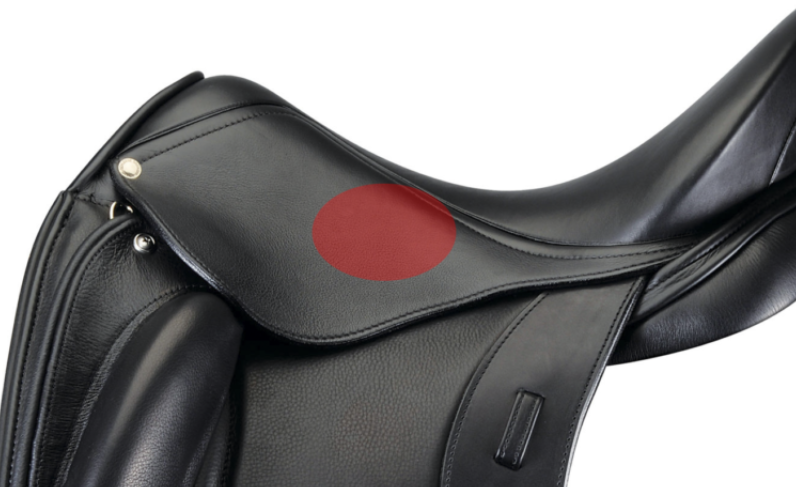
Waist
The width of the waist of the saddle is shown as the blue bar. This is also known as the seam and is the narrowest part of the seat seaming. When a rider uses a saddle that is not appropriate for their physical build and requirements, such as a female using a male saddle with a narrow seam, she will feel pressure in the area where the inner thigh meets the groin region. This is known as the ‘underwear line’ and is not present in males. As the seams are constructed of rolled leather pulled taut and stitched, there is no padding or movement in this region which causes severe discomfort and pain in the underwear line region for the female rider. She may experience chaffing, bruising and even nerve damage when riding in a saddle with too narrow of a waist. In addition, this will place added pressure against the groin and cause the rider to either tilt the pelvis backwards, squeezing the spinal discs and risking slipped/herniated discs. The rider may also try to sit further back in the saddle where the seaming is wider, however this causes the rider to be in a chair seat with the legs forward, majority of the weight carried against the cantle and the inability to move lightly and with the horse.
Saddle Balance
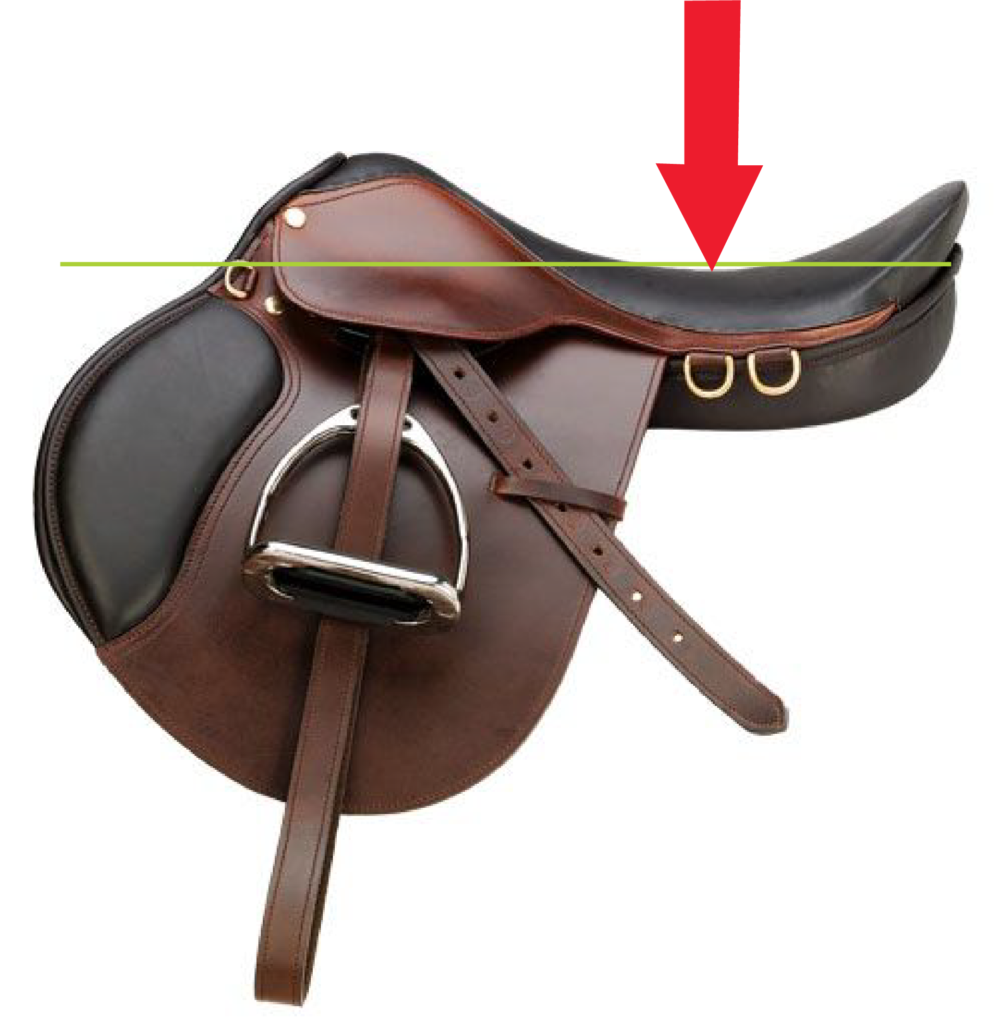
Saddles trees are manufactured to have the stirrup bar placed parallel to the ground to ensure safety and stability. When assessing your saddle, ensure the stirrup bar is parallel before determining the balance point of the saddle, which is the lowest point of the seat when viewed from the side. This area is where the manufacturer determines where the rider is supposed to sit. More often than not, many saddles have this point too far back, and especially so for the female rider. When a rider sits too far back, they are not aligned with the balance point of the horse. In addition, for females this typically causes the leg to be pulled forward and again into a chair seat. In addition, the rider is now both causing and receiving more impact and concussion through the spine (and also to the horse’s back) as they are positioned over a more active part of the equine back.
Stirrup Bar Length & Placement
Stirrup bar length and placement are hugely important in creating a balanced and aligned rider. Males typically have a longer femur versus calf, and thus require a shorter stirrup bar which is placed further forward whereas females have a longer calf versus femur, requiring a longer stirrup bar or one that is placed further back.
A rider having a stirrup bar that is the incorrect length or placement will affect their ability to achieve the shoulder-hip-heel alignment which is necessary for a pliable seat. Any deviation from this alignment causes the rider to be heavier in the saddle, to be unable to use their seat or even leg aids properly, to rely heavily on the hands as the main aid creating a heavier horse and also fatiguing the riding and risking stress injuries. In addition, the rider will constantly be playing catch-up with their feet in trying to keep the sternum over the ball of the foot for balance, leaning forward and placing more stress on the spine, hips and knees.